ORBIShttps://orbisreadingatlas.com/read/earthquake-and-the-economy
Economy
How many years does an earthquake cost an economy?
For most countries, national output recovers within a few years. The places hit hardest can carry the loss for decades.
Kobe · Port-au-Prince · 7 October 2026
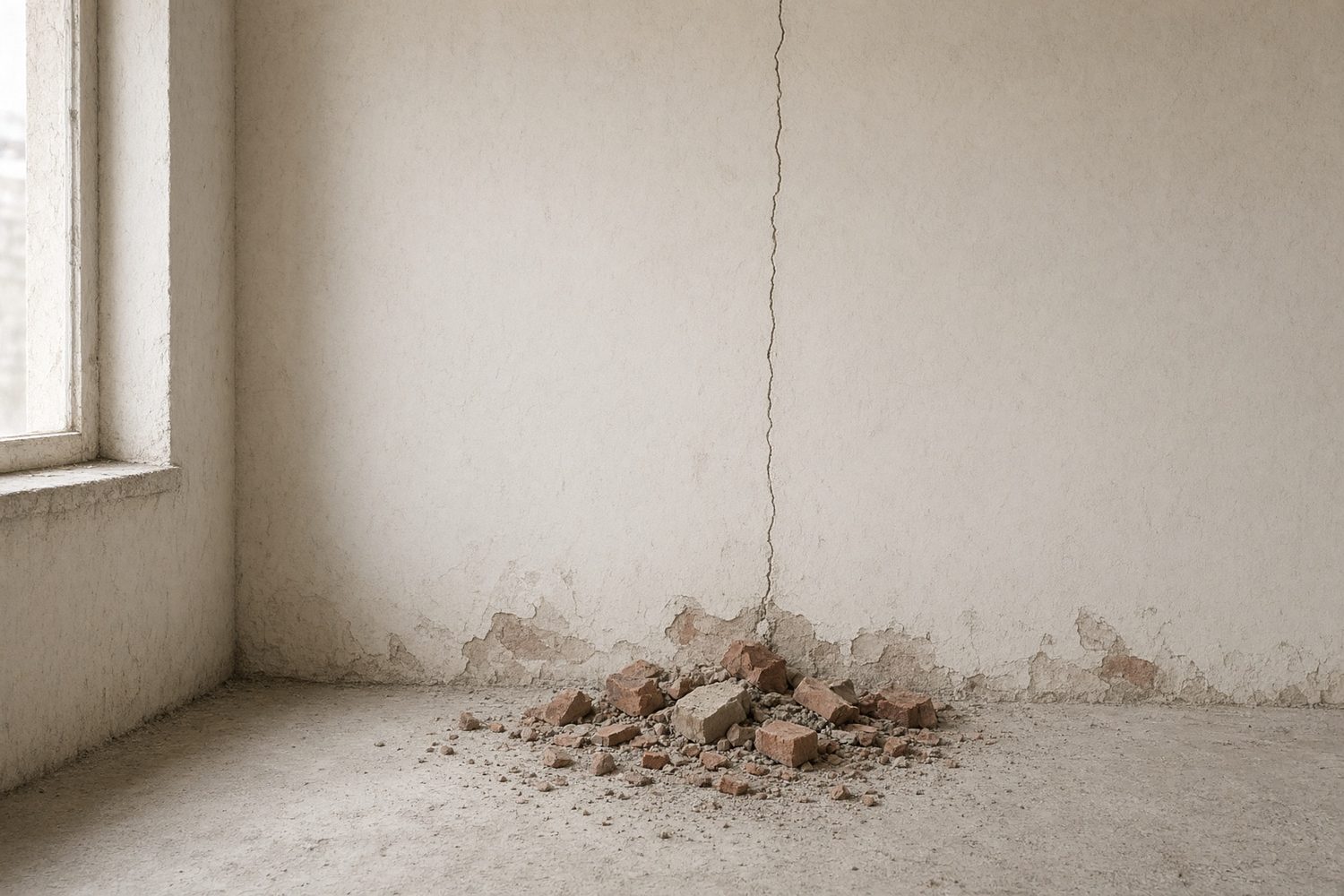
The bill for an earthquake isn't settled when the images of rubble fade from television screens; on the contrary, the real damage in the economy's capillaries begins that very day. The cost of collapsed bridges, pulverised factories and ruined ports – what we call "damage" – is merely the disaster's first face, counted only once. What remains invisible, stretching painfully over time, is the "loss of output": the value that city would have created over the years had it remained standing.
Viewed from a distance, national economies are surprisingly resilient. Studies show that, on average, even very large disasters do not leave a lasting mark on national output, unless they are followed by radical political change such as a revolution.source 1 National averages, however, are masters at masking quiet, local tragedies. The January 1995 earthquake that struck Kobe, the pride of Japan, didn't just claim more than 6,400 lives; it wrecked much of what was then one of the world's busiest container ports. While the Japanese economy as a whole absorbed the shock, twenty years later Kobe's income per person was still markedly below its expected path, and the cargo its port lost to regional rivals never returned.source 2
The real tragedy lies in the scale of the disaster relative to the country's economy. When the 2010 earthquake shattered Haiti, the official assessment put damage and losses at around $7.8 billion – roughly 120 percent of the entire nation's output in the previous year.source 3 A shock of this magnitude cannot simply be patched up with insurance policies, reserve funds or a quick wave of reconstruction; it dictates the starting line for the nation's next decade. Ultimately, how many years an earthquake costs an economy is decided less by the fault lines than by choices made long before the ground moves: how much of the economy sits in the danger zone, whether buildings meet the code, whether businesses are insured, and how quickly reconstruction money arrives.
- 1Cavallo, Galiani, Noy & PantanoCatastrophic Natural Disasters and Economic Growth (Review of Economics and Statistics, 2013)doi.orghttps://doi.org/10.1162/REST_a_00413
- 2duPont, Noy, Okuyama & SawadaThe Long-Run Socio-Economic Consequences of a Large Disaster: The 1995 Earthquake in Kobe (PLOS ONE, 2015)ideas.repec.orghttps://ideas.repec.org/a/plo/pone00/0138714.html
- 3GFDRRHaiti 2010 PDNA: earthquake impacts equivalent to 120% of GDPgfdrr.orghttps://www.gfdrr.org/en/haiti-2010-pdna-estimated-earthquake-impacts-equivalent-120-gdp
Related readings
Does consuming more mean living better?
Income and life satisfaction rise together, but each step buys less than the one before. The argument is over where, and for whom, it stops.
Economy·2 min read
How grain actually moves
Wheat, maize, and rice cross borders as balance sheets before they cross them as ships.
Economy·1 min read
Why the same heat kills more in some places
A heat wave is counted twice: by thermometers, and by the registers of deaths. Plans work on the gap between the two.
Health·3 min read
Comments
Loading…