ORBIShttps://orbisreadingatlas.com/read/bread-and-diabetes
Health
Bread on the table, and diabetes
What the grain has kept matters more than whether bread is eaten at all.
Global · 6 October 2026
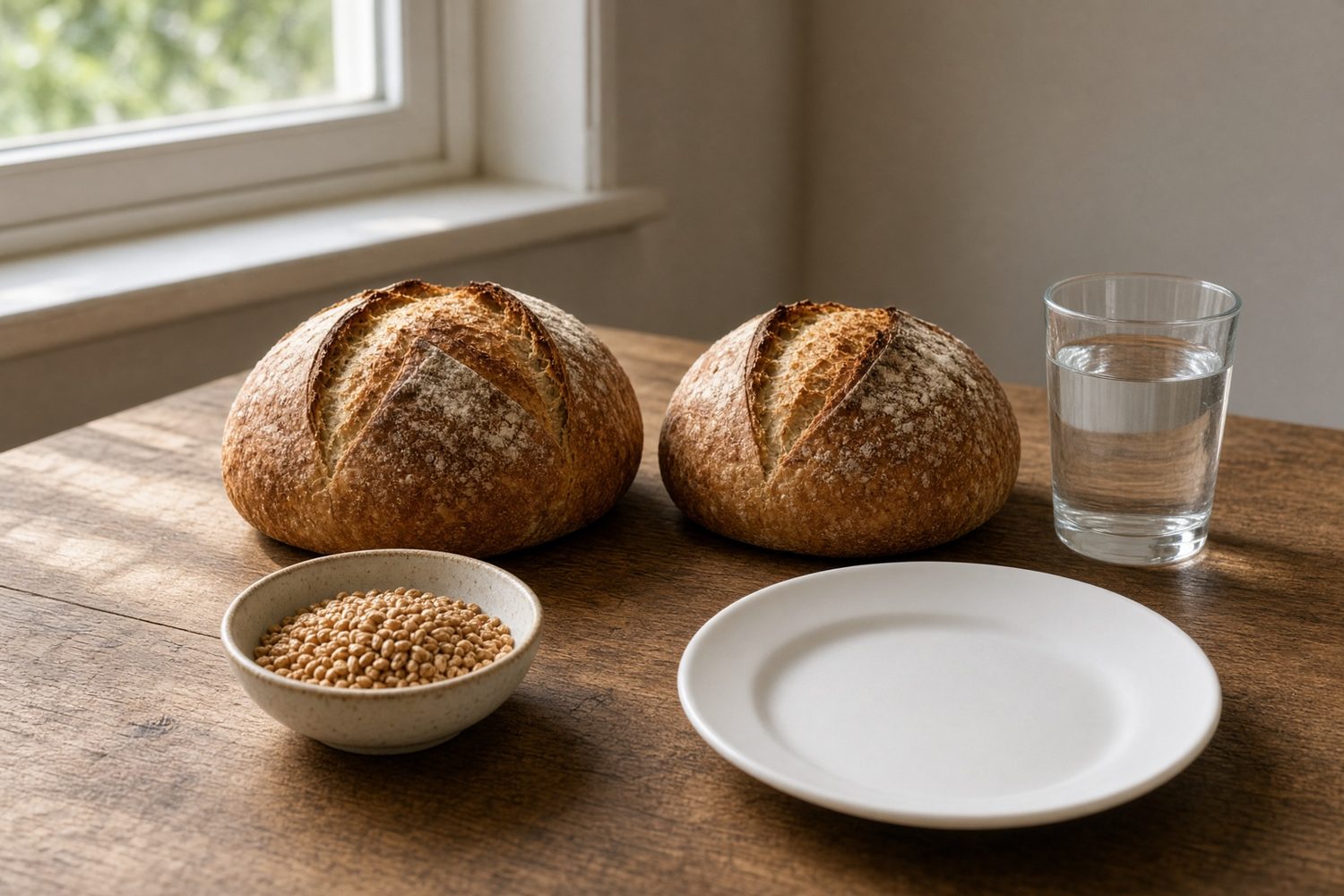
When it comes to bread on the table, what the grain has kept matters more than whether bread is eaten at all. The WHO notes that adults living with diabetes rose from about 200 million in 1990 to about 830 million in 2022; most have type 2 diabetes, closely linked to excess weight and low activity.source 1 Research separates whole grain, which keeps the bran and the germ, from refined grain, which is mostly starch. People eating about three servings of whole grains a day had roughly a third lower risk of developing type 2 diabetes than those eating almost none, while refined grains showed no such association.source 2
Analyses following nearly 195,000 adults for decades reached similar results for whole-grain foods like dark bread, oatmeal and cereals.source 3 The usual explanation lies in fibre and structure: starch from white flour raises blood sugar fast, while bran slows digestion and prolongs fullness. These studies observe what people eat rather than assign it, and people who choose whole grains may differ in other ways. A brown colour, too, is not proof of whole grain, which makes label-reading essential.
- 1World Health OrganizationDiabetes fact sheetwho.inthttps://www.who.int/news-room/fact-sheets/detail/diabetes
- 2Aune, Norat, Romundstad & VattenWhole grain and refined grain consumption and the risk of type 2 diabetes (European Journal of Epidemiology, 2013)doi.orghttps://doi.org/10.1007/s10654-013-9852-5
- 3Hu et al.Intake of whole grain foods and risk of type 2 diabetes (BMJ, 2020)doi.orghttps://doi.org/10.1136/bmj.m2206
Related readings
Why the same heat kills more in some places
A heat wave is counted twice: by thermometers, and by the registers of deaths. Plans work on the gap between the two.
Health·3 min read
How do city lights affect sleep?
Most people now live under a night sky that never fully darkens. The body's clock reads that light as a signal.
Health·2 min read
The register of trials
A study that never enters a public register is harder to find, and harder to count.
Health·1 min read
Comments
Loading…